TRACKLIST
Side A
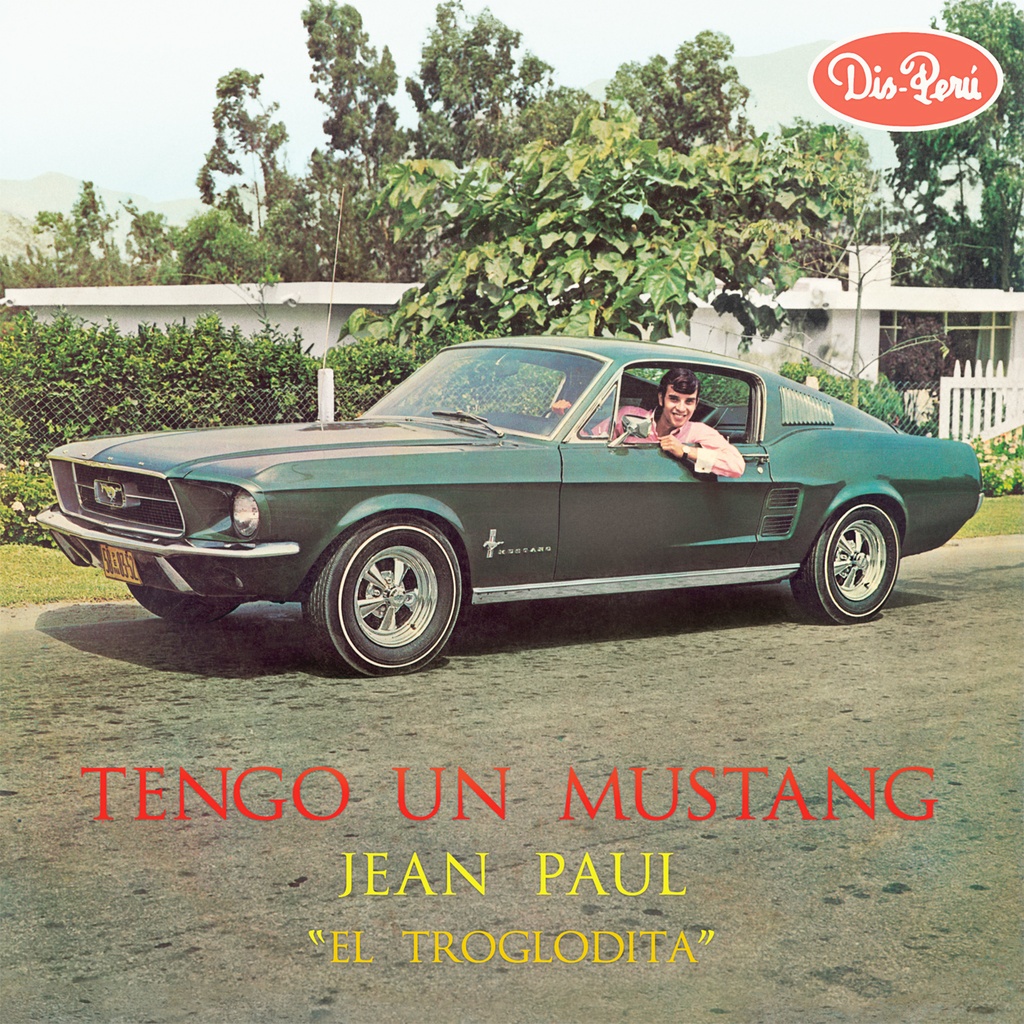
1. TENGO UN MUSTANG
2. EL LADO POBRE DE LA CIUDAD
3. PÍNTALO DE NEGRO
4. PARADERO DE ÓMNIBUS
5. TEMA DEL TROGLODITA
Side B
1. NEGRO ES NEGRO
2. LA CASA DEL SOL NACIENTE
3. EL VERDADERO AMOR
4 .QUE TODOS VAYAN AL INFIERNO
5. LLÉVAME A LA LUNA
DESCRIPTION
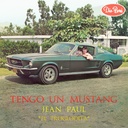
Rare debut LP by the eccentric Peruvian singer Jean Paul “El Troglodita”, known for his wild performances and extreme way of life.
Often labeled as a nueva ola artist, he rather saw his performance style as a solo artist as following in the footsteps of Los Saicos, also signed to Disperú.
The album includes Spanish sung versions of British beat songs and covers of the American songbook as well as various international hits.
Enrique Roberto Tellería made his Peruvian television debut in 1965 under the stage name Jean Paul El Troglodita and wearing an imitation leopard skin suit. He would switch from melodic calm to shouting wildly or suddenly drop to the floor on his knees and smash the furniture like crazy.
At the age of 19, DisPerú signed him to the label on the strength of these early performances. His first single included a freely translated version of 'Secret Agent Man' in Spanish. He began to work on the eleven cover versions that would feature on his first LP immediately, writing all his own lyrics and accompanied by the beat band Los Steivos.
Despite the predominance of English beat music in Peru, the album only included three songs directly related to the British invasion: ‘Bus Stop’ by The Hollies, also played in raga rock style; ‘Paint it Black’ by The Rolling Stones; and 'The House of the Rising Sun', which follows the arrangement recorded by The Animals.
Most songs come the American songbook. Apart from 'Tema de El Troglodita' (a versión of ‘Secret Agent’ by The Challengers), we find the bluesy 'Mustang Sally' (Sir Mack Rice). Two other US numbers, originally performed with orchestral accompaniment, were adapted to fit the rock band format: 'Poor Side of Town' (Johnny Rivers) and 'Take Me to the Moon' (Kaye Ballard). 'El verdadero amor’ (‘True Love'), an uncredited version is in a similar vein. The Spanish song 'Negro es negro' (Los Bravos) and the Brazilian track 'Que todo se vaya al infierno' (Roberto Carlos) also feature on the LP.
El Troglodita’s association with the so-called nueva ola, indicated on the back cover, needs clarification. In Peru, nueva ola was a mixed bag rather than a specific musical style and encompassed slow rock, twist, bossa nova and all the styles that the record industry produced to tame the wild rock 'n' roll impulses of teenagers in the early sixties. The Peruvian artists that performed these inoffensive Spanish adaptations of Paul Anka, Neil Sedaka or Frankie Avalon, were presented as successful models of youth culture.
This was until 1964, when the Beatles with their mop-top haircuts hit the charts, vindicating rock 'n' roll and imposing the group format over the soloist model. Meanwhile the press continued to call any youth music recorded during the rest of the decade nueva ola. Jean Paul noted these distinctions early on and distanced himself from it in several statements. He saw his performance style as a solo artist as following in the footsteps of Los Saicos.
His ‘hippie’ lifestyle got him arrested by the new de facto military government in 1968, who accused him of promoting drug consumption and corrupting the Peruvian youth. The charges were soon dropped but his reputation was tarnished, and he ended up emigrating to Central America.